


Next-Gen Solar Renewable Energy Systems
As the world accelerates toward sustainability, Renewable Energy Systems are no longer optional; they are essential. With global energy demands rising fast and environmental concerns becoming urgent, businesses, homeowners, and governments must shift toward smarter, cleaner, and future-ready solutions. Although the traditional grid has served us for decades, it is beginning to show clear limitations. Therefore, the transition to next-generation renewable technologies has already begun, reshaping how we power our homes, industries, and cities.
In this comprehensive guide, you will discover how future-efficient Renewable Energy Systems are being designed, how they work, why they matter, and what trends will dominate the next decade. By the end, you will clearly understand why this shift is more important than ever and how adopting these technologies, particularly the innovations brought forth by Meena Solar, can offer unparalleled long-term benefits.
The Evolution of Renewable Energy Systems in a Digital World
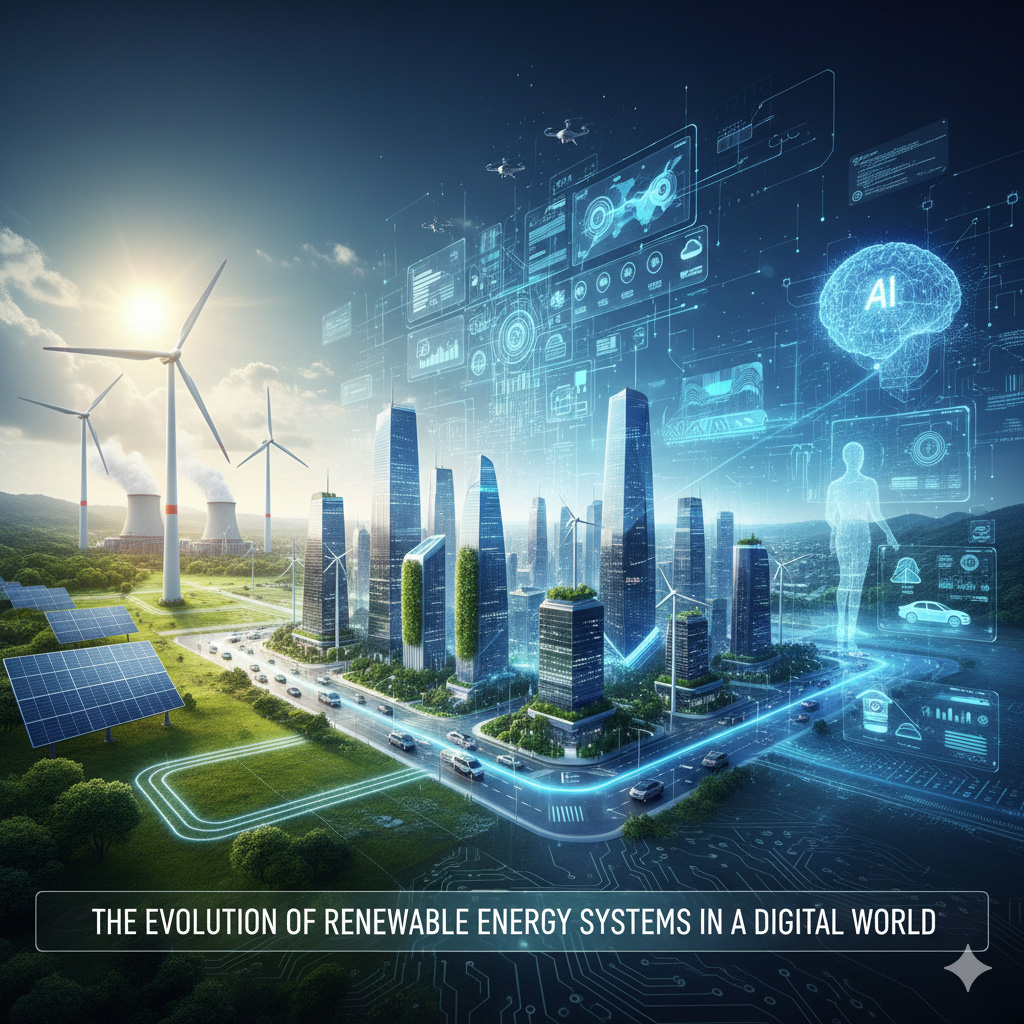
The energy landscape has transformed dramatically over the last two decades. Earlier, solar panels and wind turbines existed primarily as supplemental solutions. Today, however, they have become mainstream, supported by digital innovations, automation, and data-driven optimization.
1: What Makes Modern Renewable Energy Systems More Efficient?
Modern systems aren’t just about converting sunlight or wind into electricity. Instead, they combine smart sensors, AI-based analytics, predictive maintenance, improved battery storage, and real-time energy management. These technologies allow them to operate with higher efficiency, lower losses, and better long-term durability.
For example:
- Smart inverters automatically adjust based on demand
- AI algorithms predict energy peaks and optimize use
- Modern storage units ensure round-the-clock energy availability
Consequently, the entire ecosystem becomes more reliable and significantly more profitable over time.
2: Why Renewable Energy Upgrading Matters for Businesses and Households
Energy efficiency is no longer only about saving on electricity bills, though that is a major advantage. It is also about energy independence, grid stability, and future resilience. Furthermore, as climate policies tighten globally, early adopters stand to gain more incentives and competitive advantages.
And as industries move toward automation, reliable and sustainable power becomes even more critical.
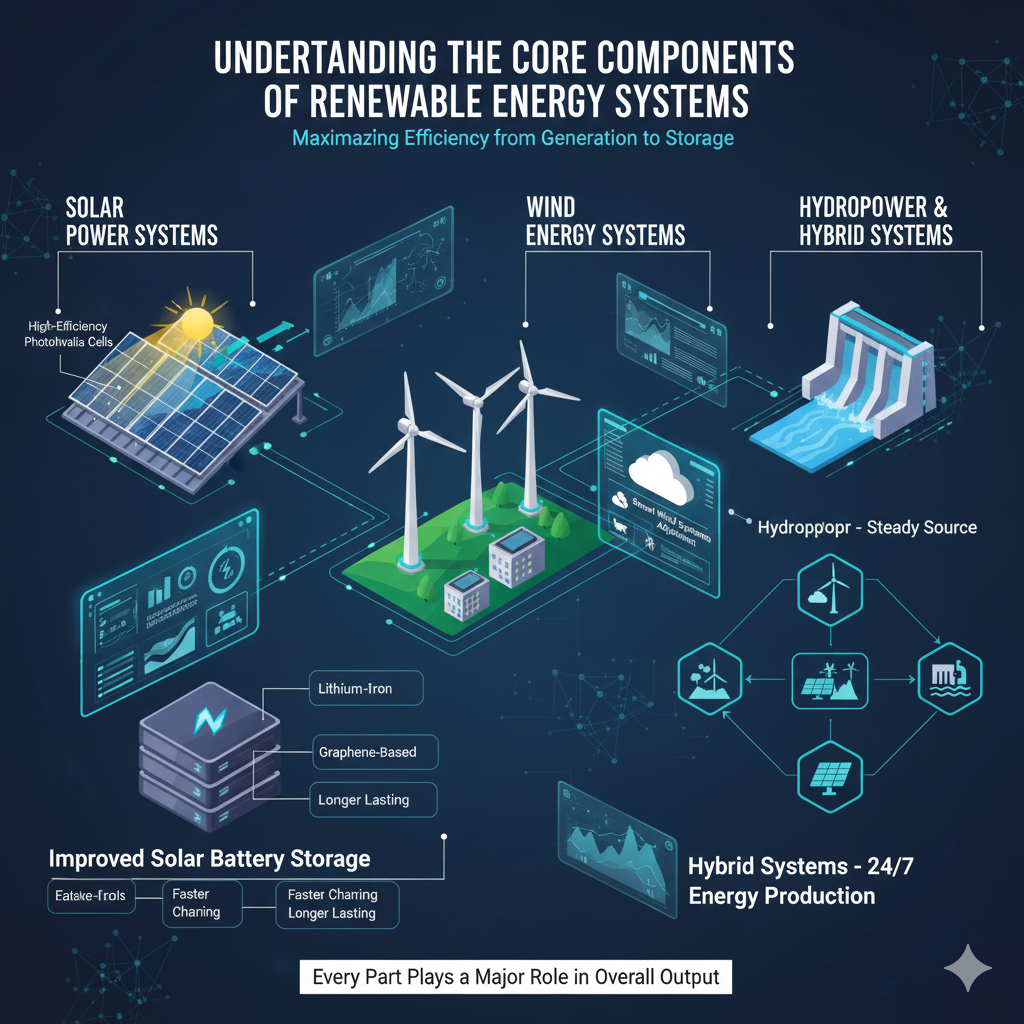
Understanding the Core Components of Renewable Energy Systems
To truly maximize efficiency, you must understand how each component works. Every part of the system, from generation to storage, plays a major role in determining overall output.
1: Solar Power Systems – The Backbone of Renewable Technology
Solar remains one of the most widely used renewable solutions worldwide. While traditional panels were simple converters, modern solar systems integrate:
1: High-Efficiency Photovoltaic Cells
Newer PV cells convert more sunlight into electricity even during low-light conditions. Additionally, bifacial panels use reflected light to increase total output by up to 30%.
2: AI-Powered Energy Tracking
With intelligent dashboards, users can monitor production, consumption, and efficiency in real time. Consequently, decision-making becomes data-driven and far more accurate.
3: Improved Solar Battery Storage
Advanced lithium-iron and graphene-based batteries now store more energy, charge faster, and last longer. Because of these improvements, users experience seamless power during night hours or cloudy days.
2: Wind Energy Systems – Capturing Power from Natural Movement
Wind power has also evolved. While larger turbines generate more energy, smaller vertical-axis turbines are becoming popular for residential and small-business use. These compact designs require less space, produce minimal noise, and work efficiently even with variable wind speeds.
Additionally, smart wind systems can communicate with weather-prediction tools, allowing them to adjust operating speeds or angles automatically.
3: Hydropower & Hybrid Systems – A Steady Source of Clean Energy
Hydropower remains dependable because water flow is highly predictable. Yet, hybrid systems that combine solar + wind + hydro are gaining traction. These systems ensure consistent, 24/7 energy production, even when one source becomes temporarily unavailable.
Renewable Energy Systems Designed for Future Efficiency
This is where emerging innovations come into play. Now, engineers are not only designing systems, but also building energy ecosystems that are autonomous, self-optimizing, and smart.
1. The Role of AI and IoT in Next-Gen Renewable Systems
Artificial intelligence and the Internet of Things are redefining energy operations. For example:
- IoT sensors collect real-time performance data
- AI predicts failures before they happen
- Automated controls adjust systems based on environmental conditions
- Machine learning improves long-term output
These technologies ensure that Renewable Energy Systems operate with maximum efficiency, minimal downtime, and higher safety levels.
2. Predictive Maintenance – Reducing Costs Dramatically
Instead of servicing equipment only when issues arise, predictive maintenance uses data to identify potential problems early. As a result, repair costs drop, and system lifespan increases significantly.
3. Automated Demand Response (ADR)
ADR adjusts energy generation and distribution according to demand. So, when consumption rises, the system boosts output or pulls stored energy automatically. Conversely, during low-usage periods, excess energy gets stored or redirected.
4. Advanced Energy Storage – The Future of Round-the-Clock Power
Battery technology is evolving fast. Tomorrow’s Renewable Energy Systems will rely heavily on:
- Solid-state batteries
- Flow batteries
- Hydrogen fuel cells
- Grid-scale mega-storage units
With these innovations, renewable energy will no longer suffer from intermittency issues. Instead, it will provide stable power all day, every day.
Designing Renewable Energy Systems for Maximum Output
Creating a future-efficient energy system requires a strategic design approach. It’s not enough to simply install solar panels or wind turbines. Instead, the system must be engineered to ensure long-term performance and adaptability.
1: Site Assessment and Resource Mapping
Before installation, professionals evaluate sunlight exposure, wind patterns, weather cycles, and shading. This ensures optimal placement and orientation. Moreover, resource mapping is done using satellite data and AI models, which enhances accuracy.
2: Smart Grid Integration
Countries are now shifting to smart grids capable of handling distributed energy sources. When Renewable Energy Systems sync with these grids, the benefits multiply:
- Faster energy distribution
- Lower transmission losses
- easier fault detection
- Better load balancing
3: Scalable System Architecture
Future efficiency depends on scalability. For example, a small solar system should be expandable without requiring a complete redesign. Modular designs allow users to add more panels, batteries, or inverters as required.
Key Benefits of Future-Efficient Renewable Energy Systems
1: Cost Savings That Increase Over Time
Although the initial cost may feel significant, operational savings multiply each year, and with automation reducing maintenance costs, long-term ROI becomes highly attractive.
2: Reduced Carbon Footprint
Future-efficient systems contribute significantly to climate goals. Clean energy production ensures that businesses and households play their part in protecting the environment.
3: Energy Independence and Reliability
With robust storage and hybrid integration, users avoid blackout issues. Furthermore, they become less dependent on fluctuating grid prices.
4: Increased Property Value
Properties equipped with advanced Renewable Energy Systems often attract higher valuations and buyer interest because of their long-term economic advantages.
Future Trends That Will Shape Renewable Energy Systems
The future of clean energy looks promising. And remarkably, innovation continues to accelerate.
1: Blockchain-Enabled Energy Trading
Soon, communities will be able to buy and sell excess energy using blockchain-based micro-grids. This development will decentralize energy distribution and empower users.
2: Floating Solar Farms
Floating solar systems are becoming popular due to land shortages. They reduce water evaporation, keep panels cool, and increase energy output.
3: Smart Home Energy Automation
Homes will automatically switch between solar, battery, and grid energy sources based on demand. This will maximize efficiency and cost savings without any manual intervention.
4: Integration with Electric Vehicles (EVs)
EVs will soon act as mobile energy storage units. Fleet owners and homeowners can draw power from their EV battery during emergencies or peak hours.
Why You Should Adopt Future-Ready Renewable Energy Systems Today
1: The Cost of Waiting Is Increasing
Every year, fossil fuel prices rise, and grid instability becomes more common. Therefore, delaying the switch can cost more in the long run.
2: Government Incentives Are More Attractive Than Ever
Governments worldwide are offering tax credits, subsidies, and rebates to encourage renewable adoption. Consequently, early adopters benefit the most.
3: Sustainability Builds Brand Value
Businesses embracing clean energy improve their public image, customer trust, and long-term competitiveness.
Final Thoughts – Building a Smarter, Cleaner, More Efficient Tomorrow with Renewable Energy Systems
Future-efficient Renewable Energy Systems are not just trends; they are solutions that will redefine the world’s energy future. Their ability to adapt, optimize, and operate autonomously makes them the backbone of tomorrow’s sustainable infrastructure. And as technology continues to evolve, these systems will only become more powerful, more cost-effective, and more indispensable.
Now is the perfect time to invest in Renewable Energy Systems that are designed for future efficiency. So, whether you are a homeowner looking to reduce bills, a business aiming for sustainability, or an organization planning long-term energy independence, the shift is not only wise, it is necessary.